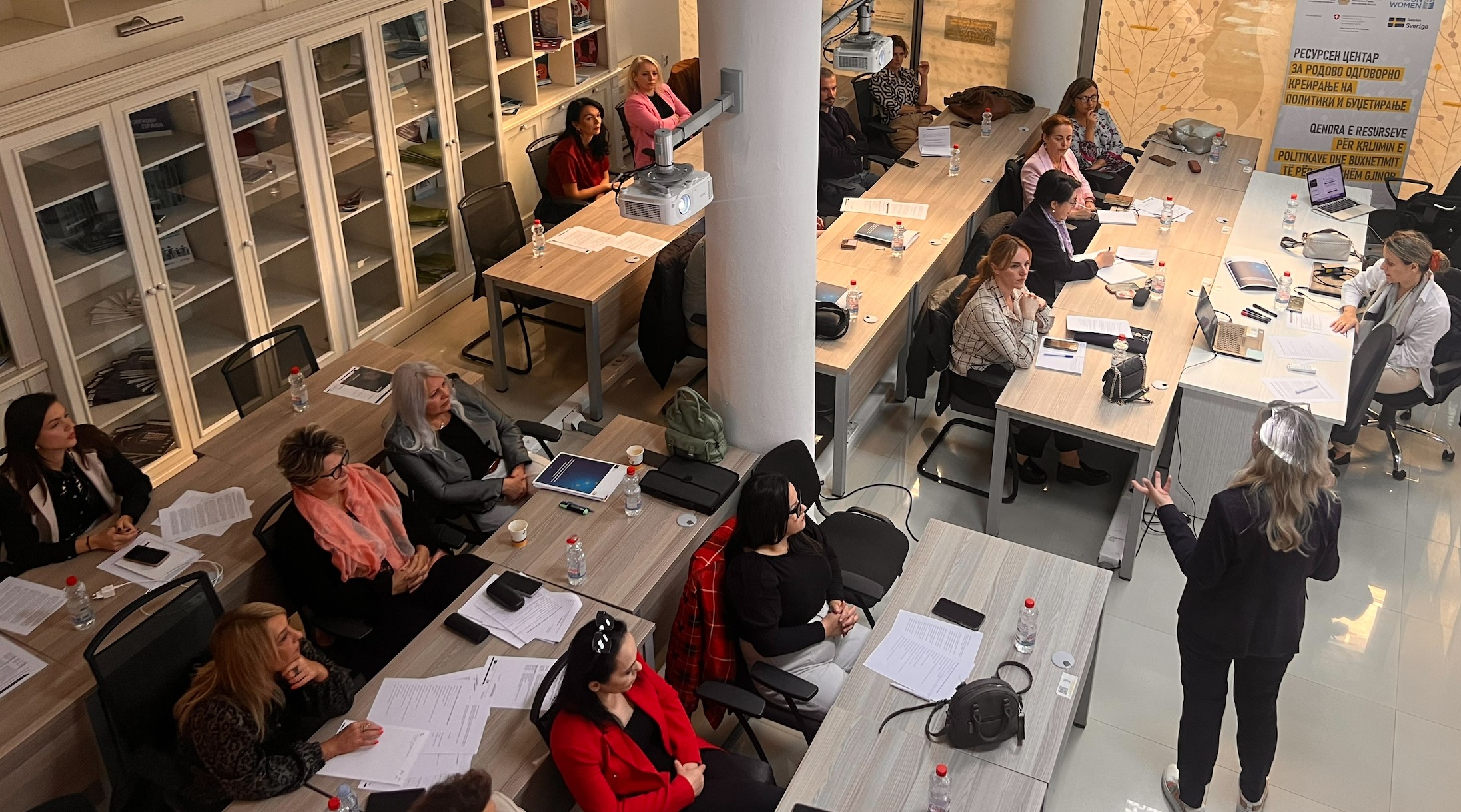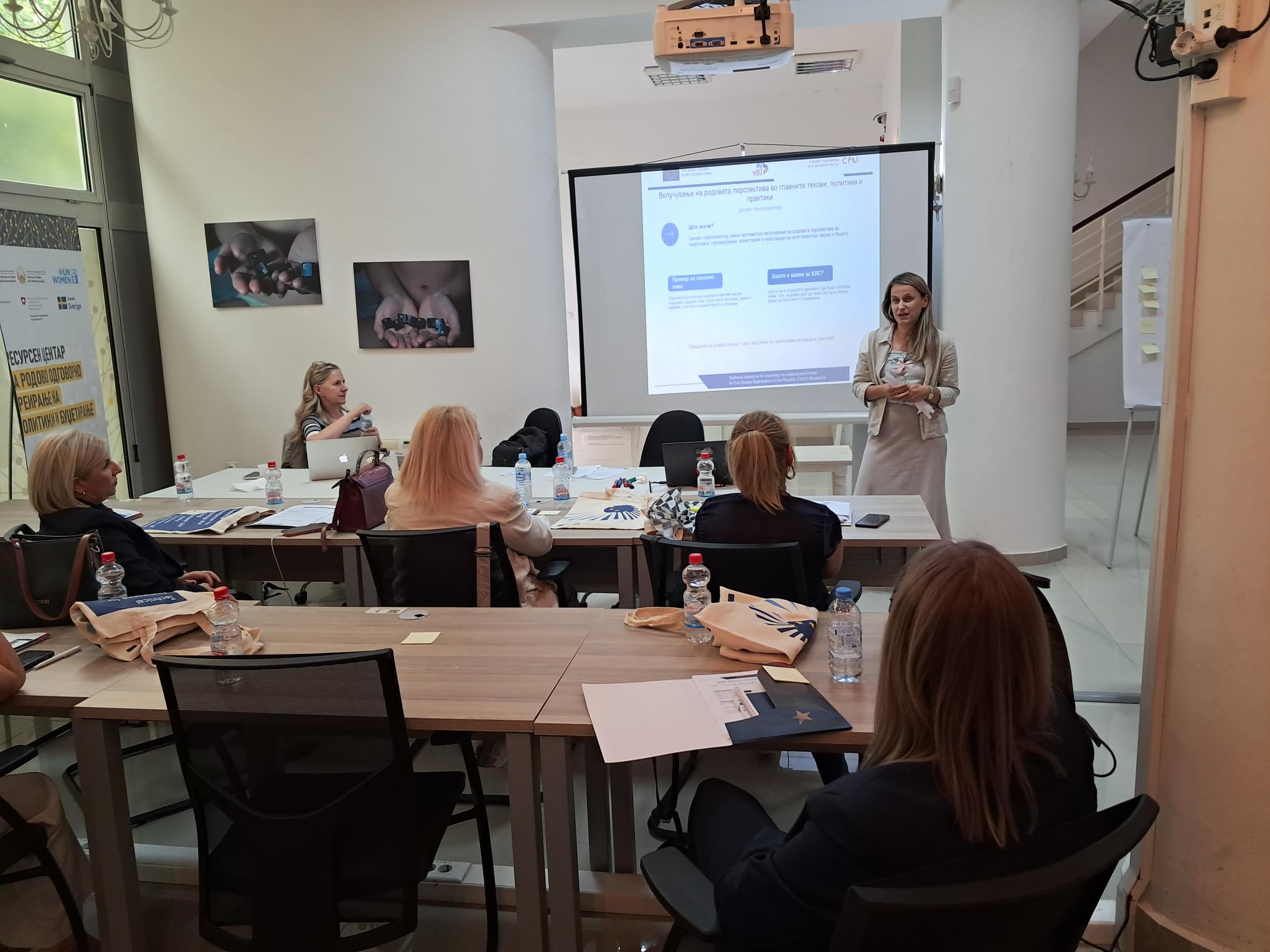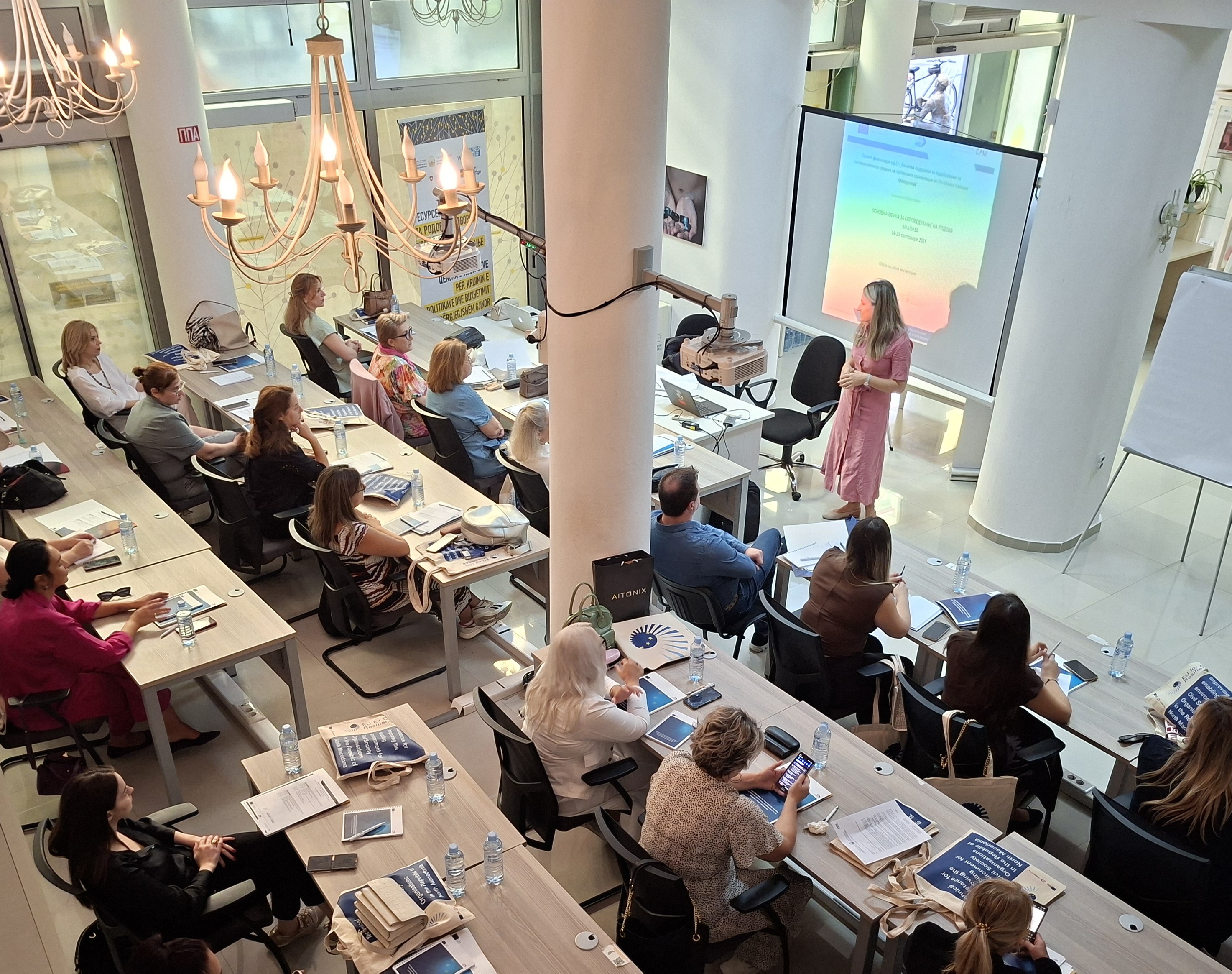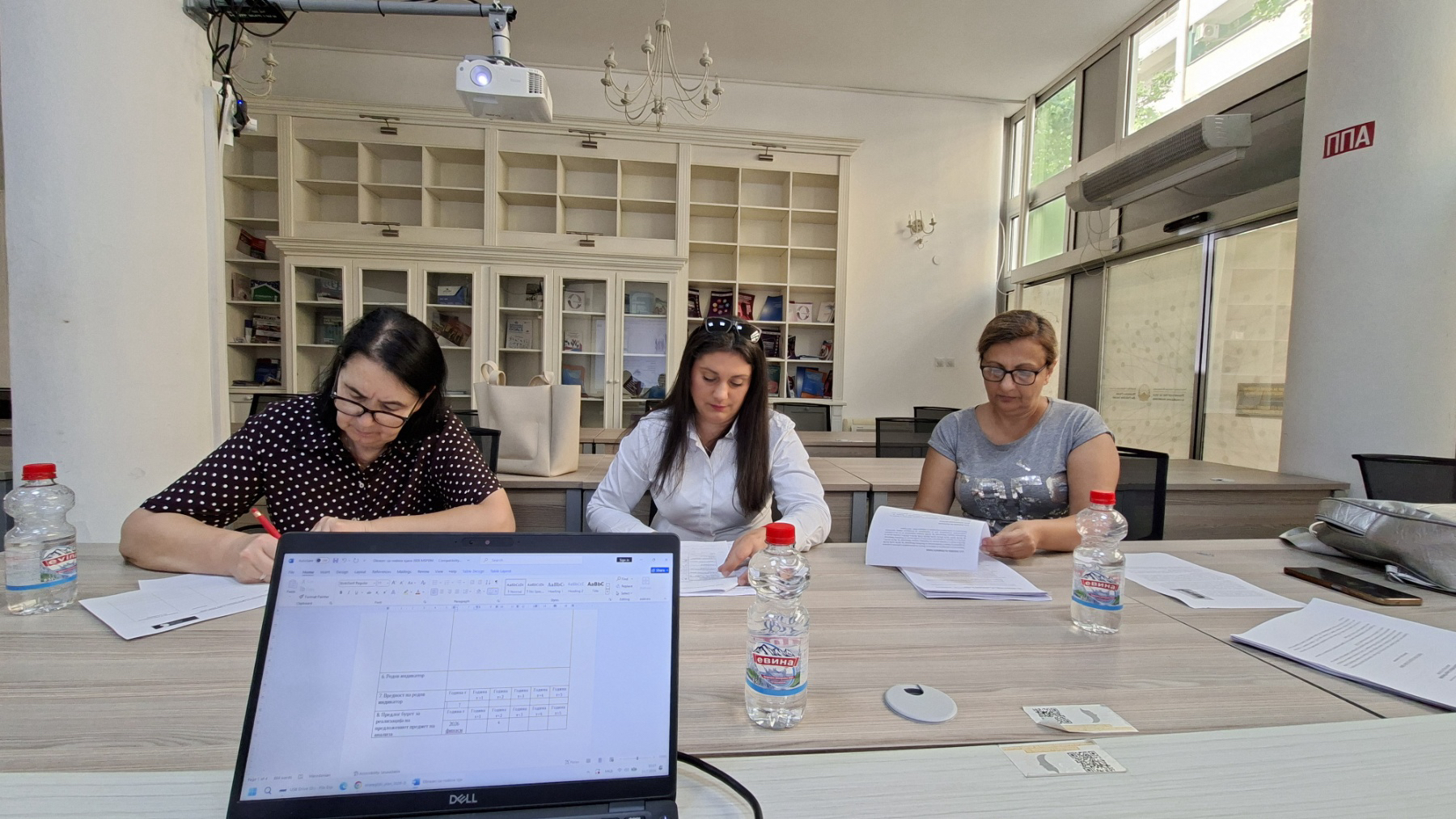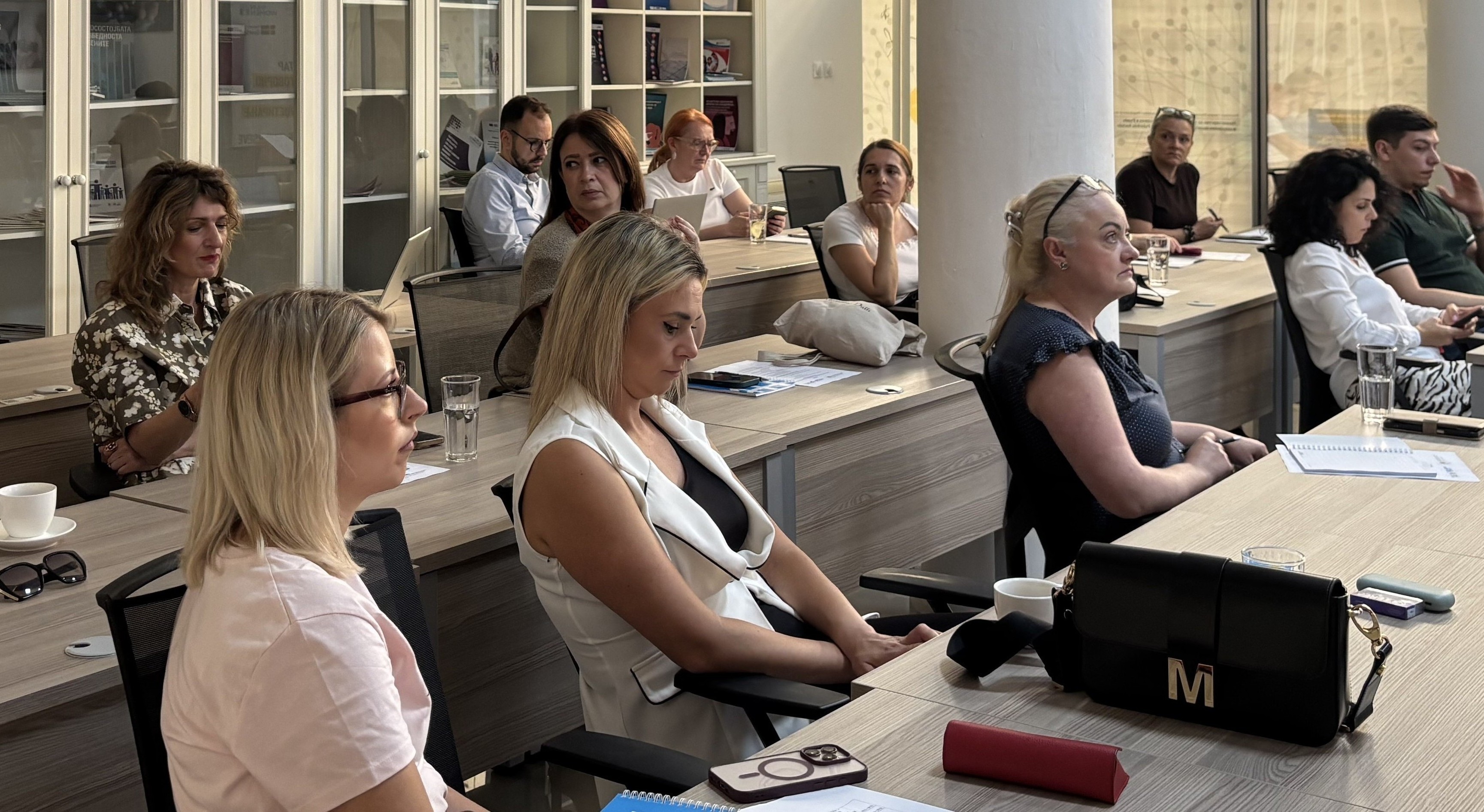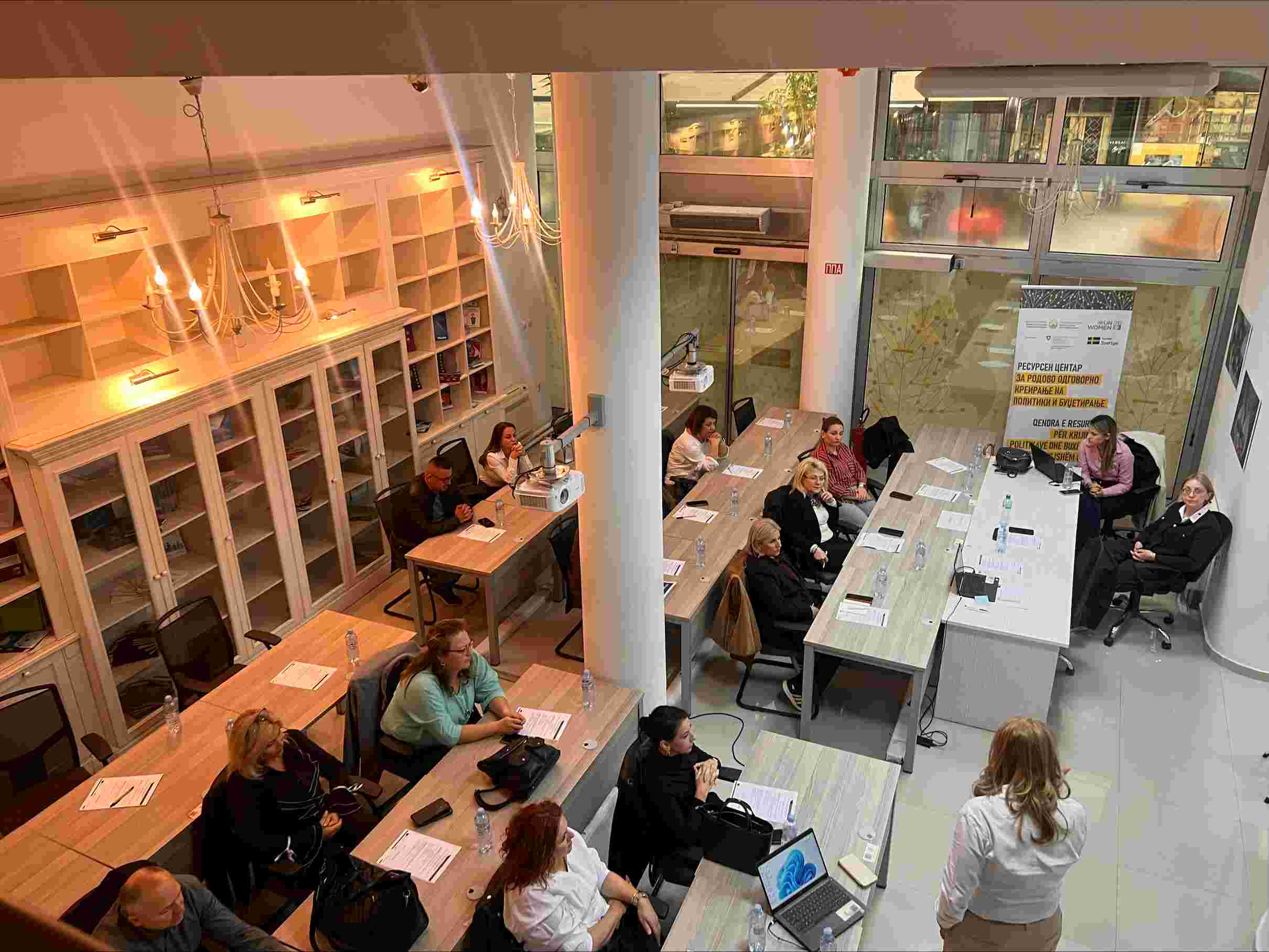
During the training, the fundamental principles and concepts of gender-responsive budgeting were covered, along with the importance of integrating a gender perspective into budget processes, and the interlinkages between public policies, strategic planning, and the allocation of financial resources.
Special emphasis was placed on the practical application of the knowledge gained within local budgeting processes, with the aim of recognizing the distinct needs of women and men and promoting equal opportunities through the planning and allocation of public funds.
The training was organized by the Unit for Gender-Responsive Policies and Gender-Responsive Budgeting—part of the Sector for Equal Opportunities within the Ministry of Social Policy, Demography, and Youth—with support from the European Union-funded project "Technical Assistance for Improving the Enabling Environment for Civil Society Organizations in the Republic of North Macedonia."
Such activities contribute to the continuous strengthening of the institutional capacities of local self-government units and the advancement of gender-responsive budgeting, ultimately fostering the creation of more inclusive policies and ensuring a more efficient, transparent, and equitable use of public funds.