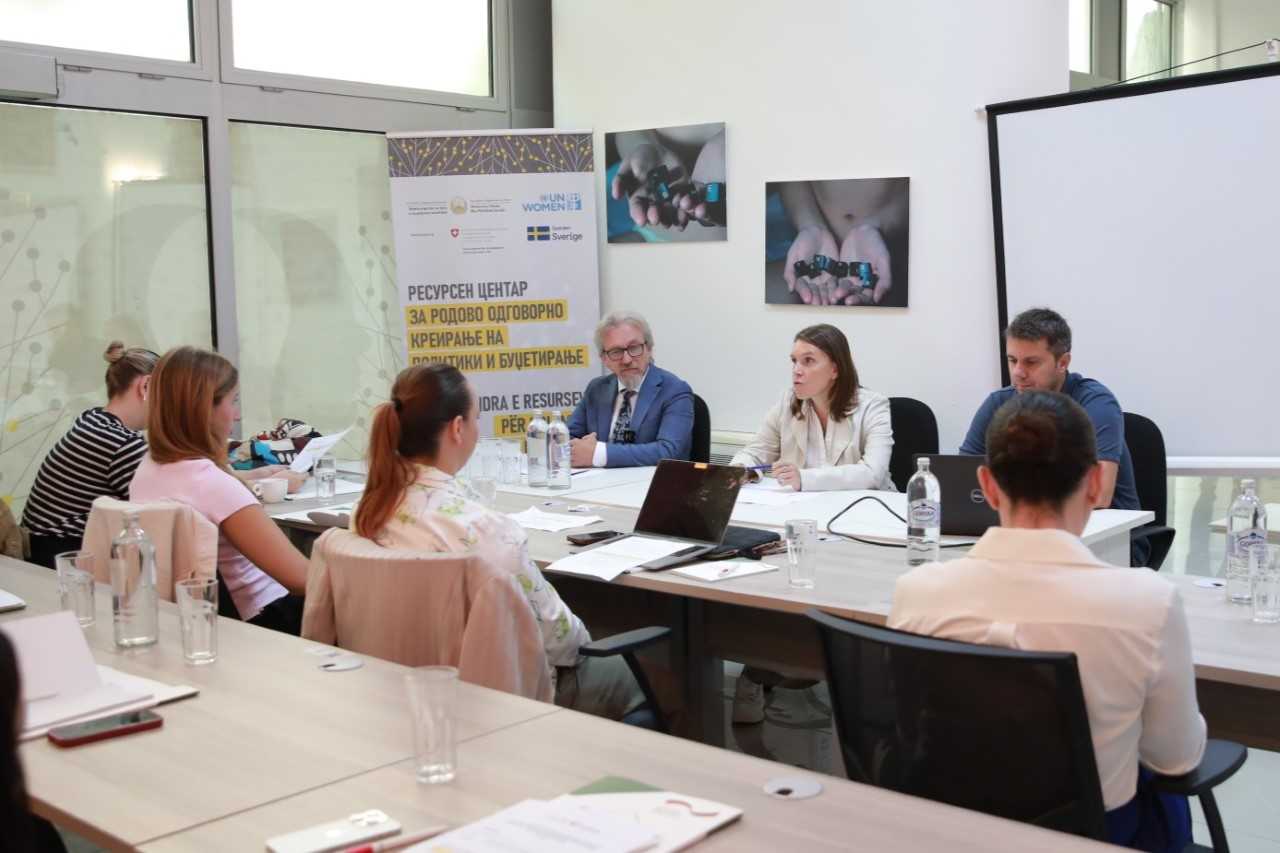
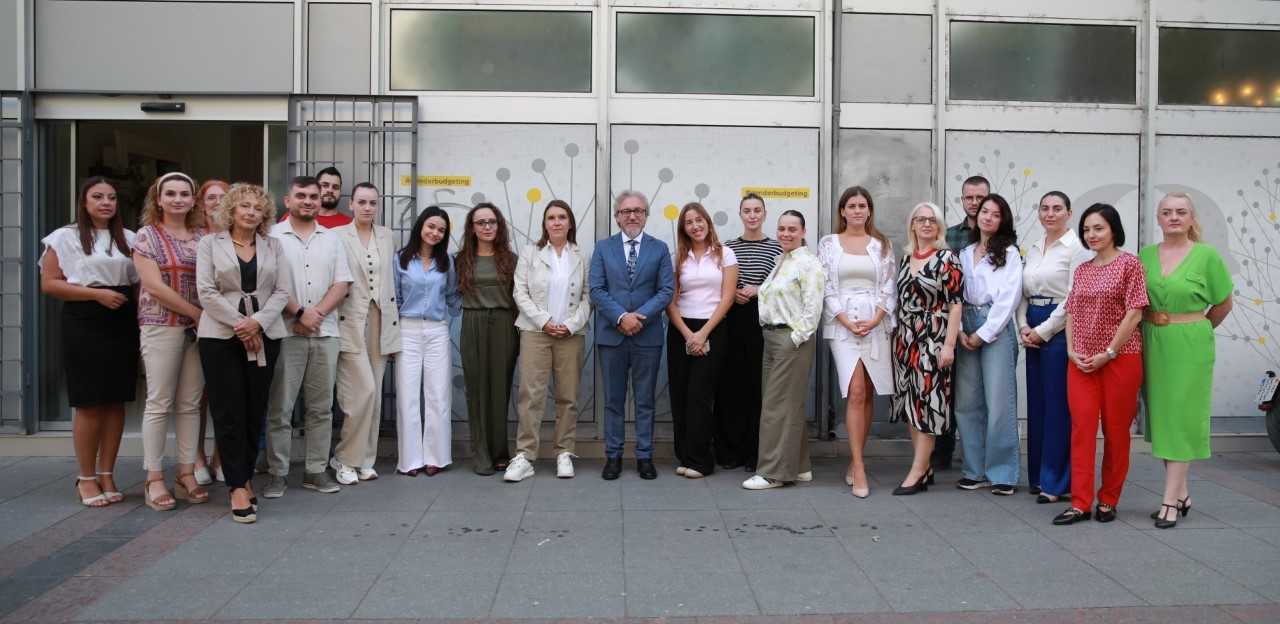
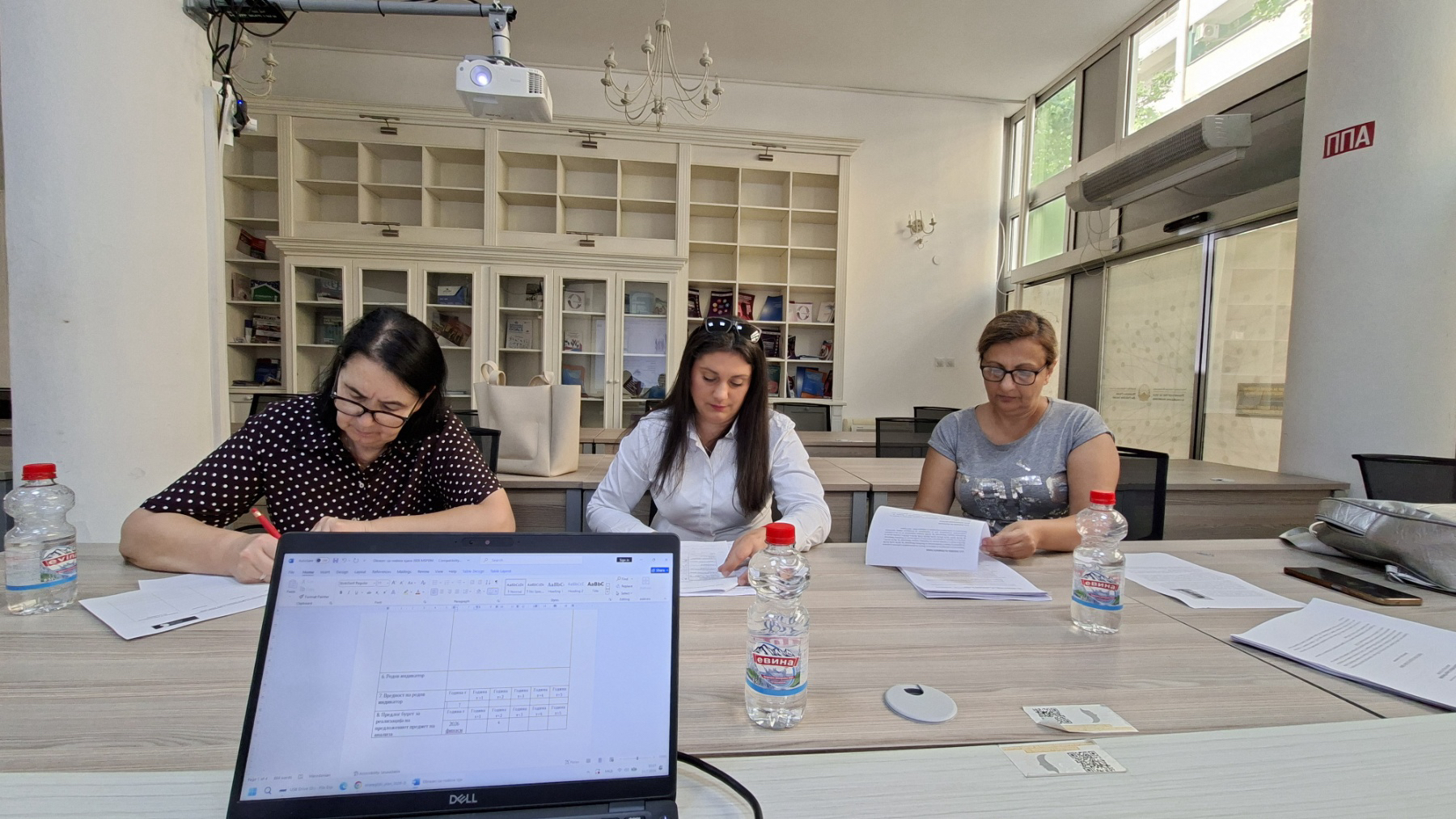
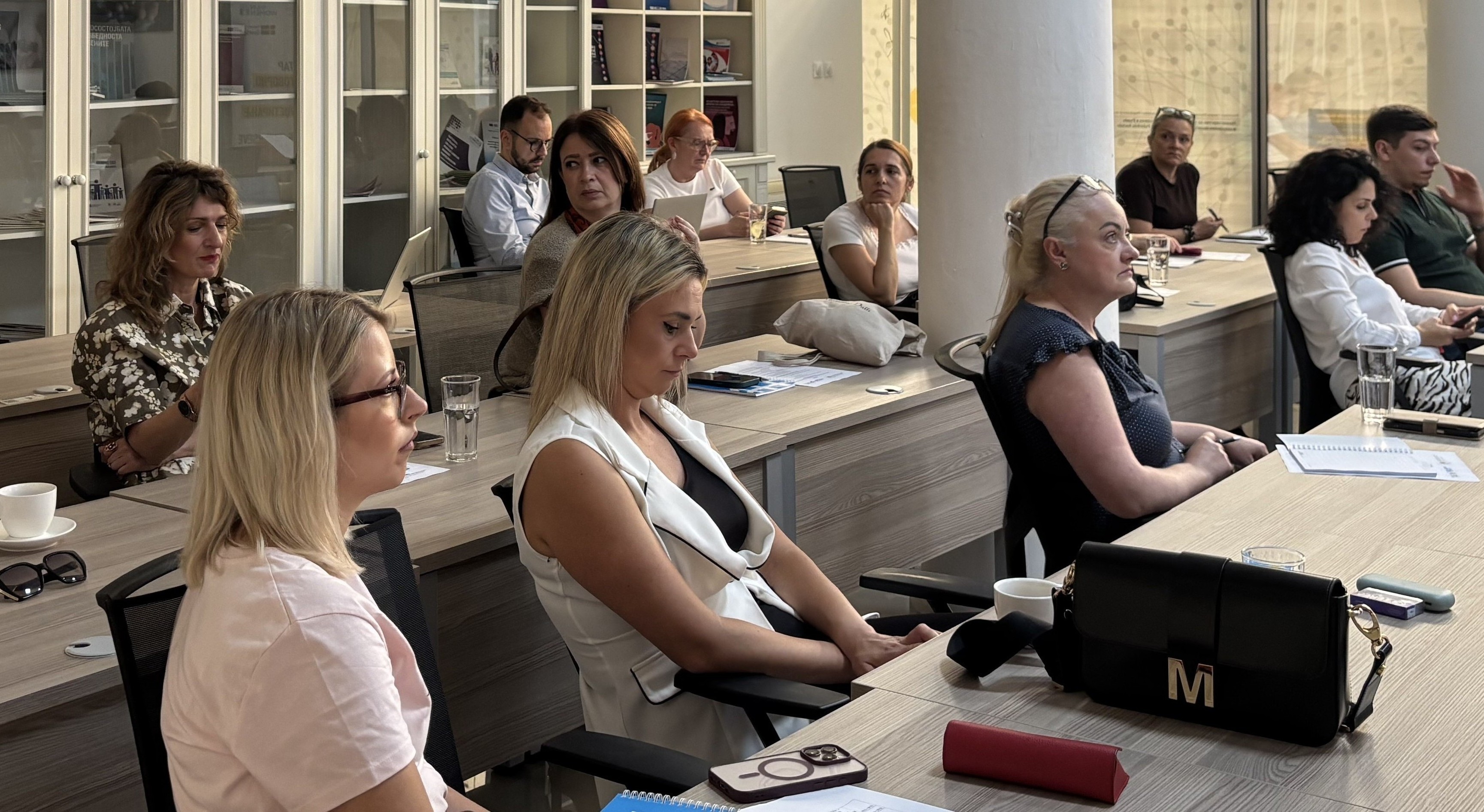
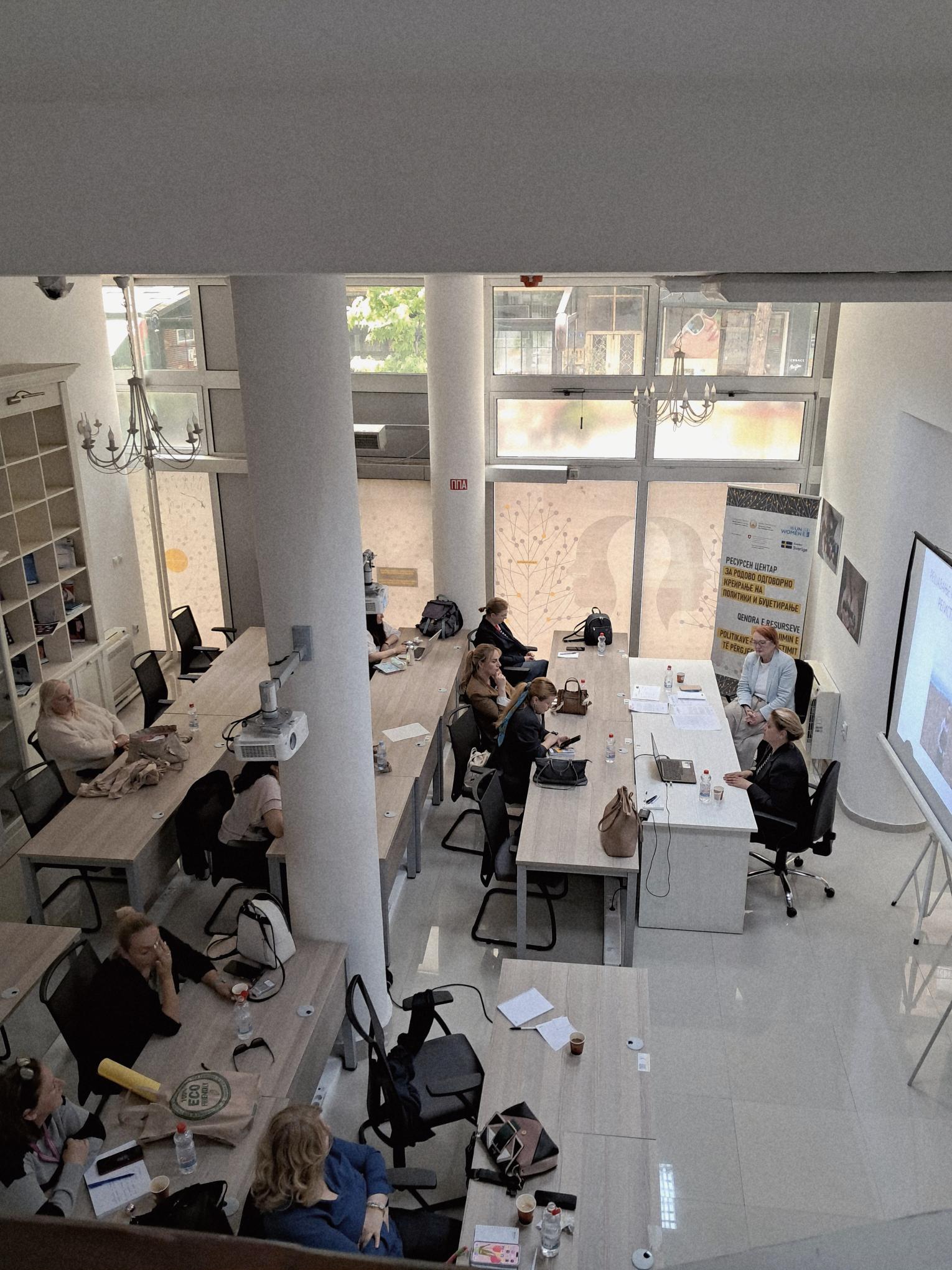
The Minister of Social Policy, Demography and Youth, Fatmir Limani, today welcomed the young people – participants of the Summer School for Gender Equality, which is being held from 25 to 28 August at the Resource Center for Gender Responsive Policymaking and Budgeting. The Summer School for Gender Equality brought together young people up to 35 years of age from the region – employed in administration and aims to strengthen knowledge about gender equality and for young people to understand the benefits of integrating a gender perspective into policies and public budgets. It is being implemented in cooperation with the German Society for International Cooperation - GIZ.
The Republic of North Macedonia has made a significant step in this area, by creating a Resource Center for Policymaking and Gender Responsive Budgeting – an institutional mechanism that enables the systematic and sustainable implementation of gender-responsive budgeting.
“Your participation here, from different countries in the region, is of exceptional importance. Gender equality knows no borders – our challenges are common, but so are the solutions. I believe that this Summer School will be the place where these ideas will be developed, strengthened and transformed into concrete initiatives that will find application in your institutions and communities. Investing in equal opportunities for all citizens is an investment in our future – in a better, fairer and stronger society,” said Minister Limani. Svetlana Zdravkovska, project manager from GIZ, in her address to the youth pointed out that GIZ supports institutions at the central and local levels in the implementation of the reform agendas of the Western Balkan countries.
"Among the key directions in these agendas are the development of gender-sensitive policies, the introduction of gender budgeting and ensuring inclusion. These priorities contribute to building just and sustainable societies. Additionally, their importance has been recognized within the framework of the Berlin Process, which aims to contribute to building democratic and inclusive societies through regional cooperation. Gender equality as a driver of regional progress is an essential message that emphasizes the fact that without gender equality, these goals cannot be achieved," said Zdravkovska. The speakers encouraged young people to actively participate, exchange opinions and make concrete proposals that will contribute to strengthening public policies and institutional practices in their countries.



.jpg)
.jpg)