Training goals
The main objective of the training is to prepare public servants with theoretical knowledge and practical tools for integrating gender principles into strategic and annual planning, in accordance with national obligations arising from laws and methodology.
The creation of policies, strategies, programs and projects with the inclusion of a gender perspective contributes to solving many development problems and brings concrete benefits to the government, to individuals – women and men, and to society as a whole.
Although when it comes to strategic planning, it is considered that those who work directly on the preparation of strategic plans are the most responsible, everyone is affected not only by the preparation but also by the implementation of strategic plans. Therefore, this training would be useful for representatives from multiple sectors of the institutions.
Training results
/Trainer
.jpg)
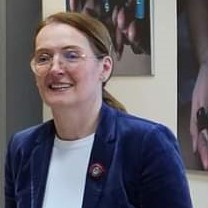
Marija Babovic
Dr Marija Babović has over 25 years of experience as a social researcher and more than 15 years of engagement in gender equality and women’s economic empowerment, with a strong focus on addressing gender-based economic inequalities. She is a full professor at the University of Belgrade, Faculty of Philosophy, Department of Sociology, and Director of Programmes at SeConS – Development Initiative Group.
Professor Babović has extensive expertise in research, policy analysis, evaluation, and co-creation processes, with a particular focus on women’s human rights and empowerment across Southeast Europe, Eastern Europe, and Central Asia. She has cooperated with numerous international organizations, including EU, UN Women, UNICEF, UNDP, UNFPA, IOM, EBRD, AFD and the World Bank.
Her work includes leading the adaptation of UN Women’s global Women’s Economic Empowerment Strategy to the Europe and Central Asia region, as well as regional analytical work on the gender dimensions of mixed migration in Europe and Central Asia. She also authored the first Gender Equality Index Report for the Western Balkans, published by the European Institute for Gender Equality (EIGE).
She has published numerous monographs, articles, and peer-reviewed papers, contributing substantially to knowledge development and evidence-based policymaking in the fields of gender equality, women’s economic empowerment, and gender-responsive migration policy.
.JPG)
Kristina Doda
Kristina Doda is human rights expert leading programmes that promote fundamental rights, gender equality, access to justice and inclusive public policies. She has extensive experience working with international organisations, public institutions and civil society organisations, supporting legal and policy reforms, institutional development and the integration of human rights principles into governance and development initiatives. Her expertise encompasses human rights-based approaches (HRBA), anti-discrimination, gender equality, disability inclusion, access to justice, legislative and policy analysis, research, monitoring, stakeholder engagement and capacity building. She has successfully managed complex programmes, coordinated multidisciplinary partnerships, prepared shadow reports for international human rights mechanisms, supported legislative reforms and developed practical methodologies and implemented training programmes for public institutions and civil society organisations.